A legacy Handwerks-ERP with 135 isolated databases consolidated into a custom web-based system in 7 days for €200 of AI tokens.
A complete legacy-to-modern ERP rewrite for a German Handwerksbetrieb. The project demonstrates what a focused AI-driven workflow can deliver in the Handwerk segment: where off-the-shelf craft ERPs are over-engineered and cost-prohibitive, a custom, lean system that does exactly what the business needs is now feasible in days instead of months — and at a fraction of the cost.
The Challenge
GSwin/GuWin was no longer maintainable. The Handwerks-ERP market offered no realistic alternative: competitor systems are too overloaded, too expensive, and migrating from one craft-ERP to another is technically near-impossible. Off-the-shelf solutions were out of the question.
The Solution
Built a custom, lean web-based ERP from scratch in 7 days using a 6-step AI-driven workflow. The data from all 135 isolated GSwin databases was consolidated into a single clean PostgreSQL ERM, exposed via a FastAPI backend, and rendered in a modern Next.js frontend. The whole thing was scaffolded and migrated using opencode (anomalyco/opencode) as router, Claude (Anthropic) API as the strong model, and Figma-to-Code (Anima) for rapid frontend assembly.
Outcomes
135 isolated GSwin databases consolidated into one clean PostgreSQL ERM.
Full rewrite shipped in 7 days with €200 of Claude API tokens.
Modern, plattformunabhängiges Web-ERP (Desktop & Laptop, hosted on Hostinger).
AI-Workflow (opencode + Claude) accelerated a multi-month project to a single sprint.
Foundation laid for upcoming AI/automation features (payment matching, dynamic pricer, voice-to-quote).
Context — Why It Mattered
Peters GmbH ist ein Handwerksbetrieb (Spenglerei/Dachdecker). Die Legacy-Software GSwin/GuWin ist ein spezialisiertes, aber technisch hoffnungslos veraltetes Handwerks-ERP. Konkurrenz-ERPs sind zu überladen, zu teuer oder technisch nicht migrierbar — eine Migration zu einem anderen Standard-Handwerks-ERP wäre unmöglich oder unverhältnismäßig teuer. Eine Eigenentwicklung war die einzige realistische Option.
Constraints
Die Daten durften das interne Netz nicht verlassen — die Migration musste lokal laufen. Keine Standard-Handwerks-ERP-Alternative am Markt verfügbar. Kunde brauchte eine schnelle, schlanke Lösung ohne überladene Features. Solo-Umsetzung, kein Team.
My Role
Alleiniger Entwickler über alle Schichten: 2h Discovery vor Ort, Entity-Modellierung, Daten-Migration, Backend (FastAPI), Frontend (Next.js + Figma-to-Code), Hosting (Hostinger), DevOps.
Approach & Process
1) 2h Discovery beim Kunden — Live-Beobachtung der täglichen Arbeit mit GSwin, Notizen zu genutzten vs. ungenutzten Funktionen. 2) Prozesse niedergezeichnet, ERM entwickelt, Beziehungen der 135 alten DBs aufgelöst. 3) Paper-Sketches → Google Stitch → Figma, Kunden-Freigabe. 4) Migration lokal gestartet (Datenschutz), Template-Frontend vorbereitet. 5) 6-Schritte-AI-Workflow pro Feature: Plan → AI Alignment → Handoff → Test/Dev → Review → Cleanup. 6) Figma-to-Code (Anima) für Frontend-Befüllung, Backend (PDF) als schwierigster Teil. 7) Hosting auf Hostinger, Absicherung.
Transformation
Legacy ⇔ Modern
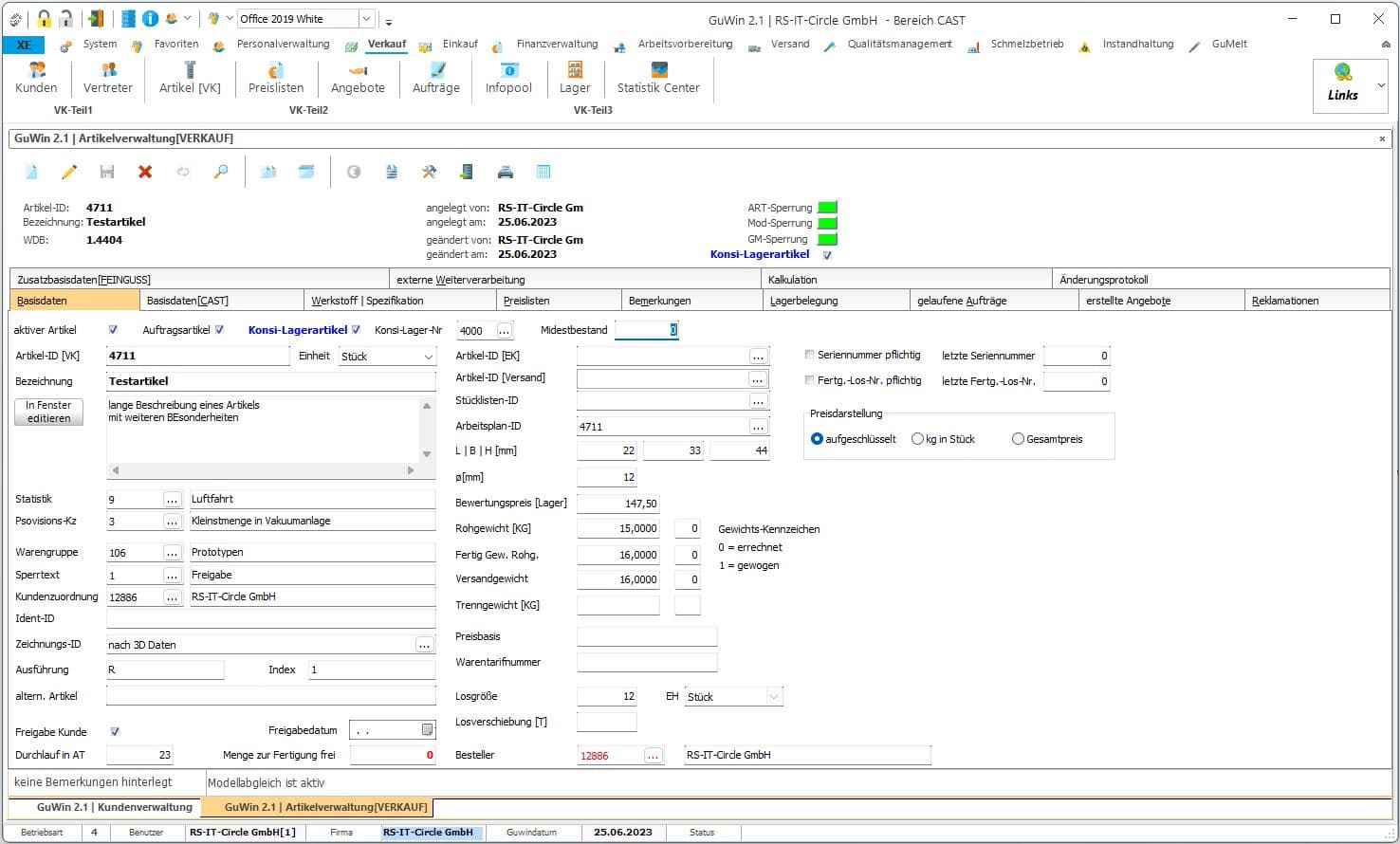
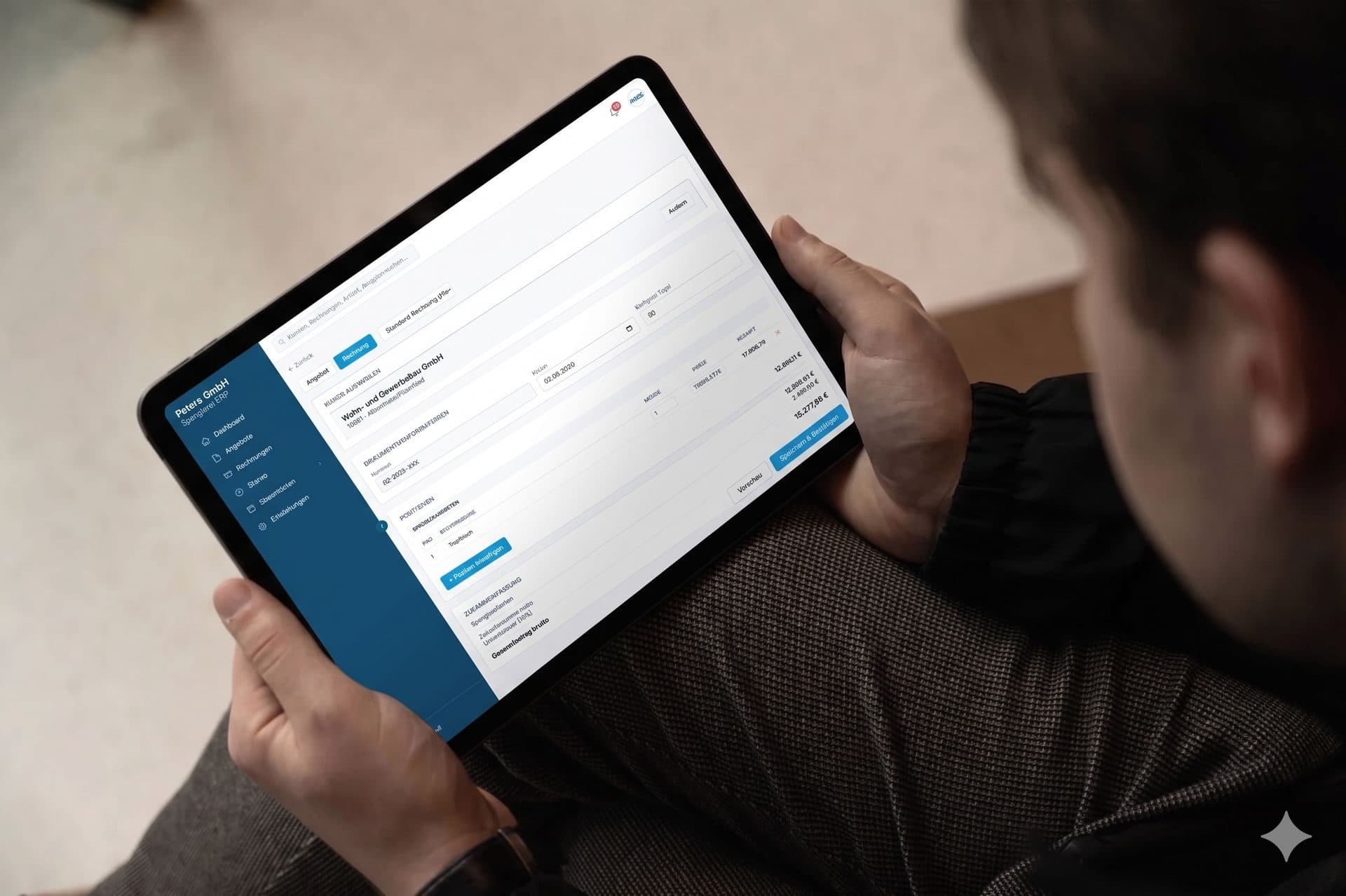
Data Architecture
From 135 isolated DBs to one clean ERM
Before
After
Timeline
7 Days, 4 Phases
What I Learned
Selbst wenn ich kein Backend- oder Frontend-Entwickler bin – mit den Programmier-Basics und den richtigen Workflows sind unglaubliche Migrationen möglich. Es braucht nur etwas Mut und Pragmatismus. Im Handwerk sind Standard-ERPs überteuert und hoffnungslos überladen. KI ist kein Hype. Geschäftsmodelle, für die man früher 50.000 € verlangen konnte, sind heute mit den richtigen Tools für einen Bruchteil umsetzbar. Wer das ignoriert, wird fundamental gefährdet.
— Daniel Peters